2025 in books
2025 kept me busy, continuing in non-fiction, mostly scientific reading. I got lost in these interests; but here are some of the things I learned.
Pale Blue Dot
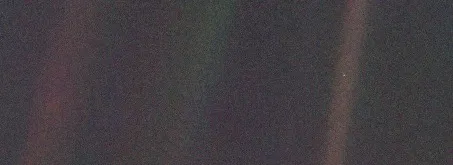
Carl Sagan has had a lasting impact on American culture, although current events might suggest that influence has waned. I will at least do my part to keep his scientific thinking, curiosity, and love of Life and appreciation of our place among the stars. Sagan's attitude struck out to me; this was written in 1994 just after the fall of the Soviet Union. In America and among the Western world, there was such an optimism about the future, and the role of science in shaping our lives for the betterment of humankind. Reading in 2025 really contrasted against the atmosphere of today; where science is attacked, optimism is kicked to the side in favor of a general and genuine nihilism, and doom and gloom surround my generation. We must keep the optimism alive, we have to keep dreaming of a world of hopeful tomorrows. If we lose the vision we will lose the fight for goodness and hope. We can't lose the vision.
The Pale Blue Dot started as a photograph of Earth from 3.7 billion miles away and turned into this story of the human species' understanding of the self throughout history. Sagan talks about each cosmological discovery over the ages as a series of "Great Demotions". We have gone from being the center of the Whole Universe, to the only "true" world, to belonging in the only solar system, to being the only galaxy, and finally finding ourselves within one galaxy of hundreds of billions of others. Each one of these discoveries plucks us up from our high and mighty self perception and lowers us down as a more insignificant part of the whole. Each demotion taking an unmeasurable psychological toll to our understanding of self and of worth we ascribe to ourselves.
It is part of the zeitgeist to hate humanity. It's quite frustrating to me; why hate ourselves? It's important to critically self-examine our worst parts; but it is part of the loving spirit to acknowledge and discard our worst behaviors to transform ourselves into a higher collective being. I sympathize with the disgust of our worst; I feel it too. But we can't give up on the good, otherwise the bad will take control. I see many others hopeful for a better world and that brightens me.
Understanding our place in the Universe requires humility, that which, can provide a lens of perspective by which we use to understand our selves and the Earth in which we rely on. Our place is not of Kings and Queens of the highlands of the Universe, but of shepherds of the valley we find our Earth nestled within. This kind of humility is grounding, but I believe accompanies the value we humans bring to our corner of the Universe. We exist, and that is enough to be worthy of a positive sense of self. We love, and that is enough to be imbued with a sense of duty to others. We organize, and that is enough to be expressed as a sense of pride.
If we crave cosmic purpose, then let us find a worthy goal.
- Carl Sagan
The Demon Haunted World
How do we determine what is true in the world? I think this book is best described by Sagan himself in his interview with Charlie Rose:
My feeling, Charlie, is not that pseudoscience and superstition, "new-age" so called beliefs, and fundamentalist zealotry are something new; they have been with us for as long as we've been human. But we live in an age based on science and technology, with formidable technological powers. And if we don't understand it, and by 'we' I mean the general public, then who is making all the decisions about science and technology that are going to determine what kind of future our children live in?
We've arranged a society based on science and technology in which nobody understands anything about science and technology. This combustable mixture of ignorance and power, sooner or later, is going to blow up in our faces. Who is running the science and technology in a democracy if the people don't know anything about it?
And the second reason that I'm worried about this, is that science is more than a body of knowledge. Its a way of thinking. Of skeptically interrogating the universe with a fine understanding of human fallibility. If we are not able to ask skeptical questions, to interrogate those who tell us that something is true, to be skeptical of those in authority, then we're up for grabs for the next charlatan - political or religious - who comes ambling along!
It's a thing that Jefferson lay great stress on. It wasn't enough to enshrine some rights in the constitution; The people have to be educated, and they have to practice their skepticism in their education otherwise we don't run the government; the government runs us.
Narrative of the Life of Frederick Douglass
This should be required reading for every American, if not all humans, if it is not already so. Frederick Douglass' story exemplifies the astounding power that knowledge provides to the human soul, and the danger it poses to an entrenched societal power. I consider Douglass to be a Founding Father of American ideals and an exemplary force in human history. Do yourself a favor and read this narrative. We should honor his contribution to our society.
The Precipice
I got this book for free after signing up to the 80,000 Hours newsletter. 80,000 Hours is a nonprofit with the message that we spend about 80 thousand hours working in our lifetimes so we might as well make them worthwhile by solving humanities biggest challenges; things like AI, climate change, world health, etc.
This was a heavy read and a little bit of a philosophical slog. It's essentially about every possible way humanity could be destroyed and potential ways to prevent our destruction. It is both high level and deep dives into specifics. It talks of climate change, political entrenchment, and the dangers posed by "superintelligent" AI. I think the book was interesting in a philosophical sense but didn't really engage me or change my world views much. I think we are more likely to be endangered from running out of fossil fuels and the potential societal collapses that can trigger.
Whole Earth Discipline
This is a well researched and succinct manifesto on ecopragmatism, and using technology to solve the impending doom of the climate crisis. I'm a big fan of Stewart Brand, and this book is well worth the read. I'm writing a more detailed review of Stewart's ecopragmatic manifesto on my other blog here: https://natural-state.bearblog.dev/blog/?q=whole-earth
The Blue Machine
I'm not finished reading, but this is an interesting dive into the biggest and most consequential environmental system on Earth; the oceans. Humans are land based and much of our conservation is focused on the land, but the Earth is an Ocean Planet, and the foundation of the engine of our environment on this planet is the oceans, and we desperately need to refocus our attentions there.